Fluffy, savory layers of four eggs, finely chopped scallions, and umami broth rolled into a cozy Korean homestyle side dish
Source · Seo Min-jeong (Lime), A Bowl of Home Cooking (Pampas), p. 93

On evenings when a pot of stew feels just a little lonely on the table, pull out four eggs and a scallion from the fridge. Whisking savory broth right into the beaten eggs and rolling thin layers over medium-low heat gives you a tender, pillowy Korean rolled omelet that stays moist even after it cools.Serve half warm alongside tonight's dinner, and tuck the other half into tomorrow's lunchbox. Let's take a look at the eggs and simple pantry seasonings that keep every bite silky and flavorful.
Ingredients (4-Egg Batch)
Fresh items to pick up are listed with both US and metric weights and counts, while everyday seasonings are grouped separately under Pantry Staples.
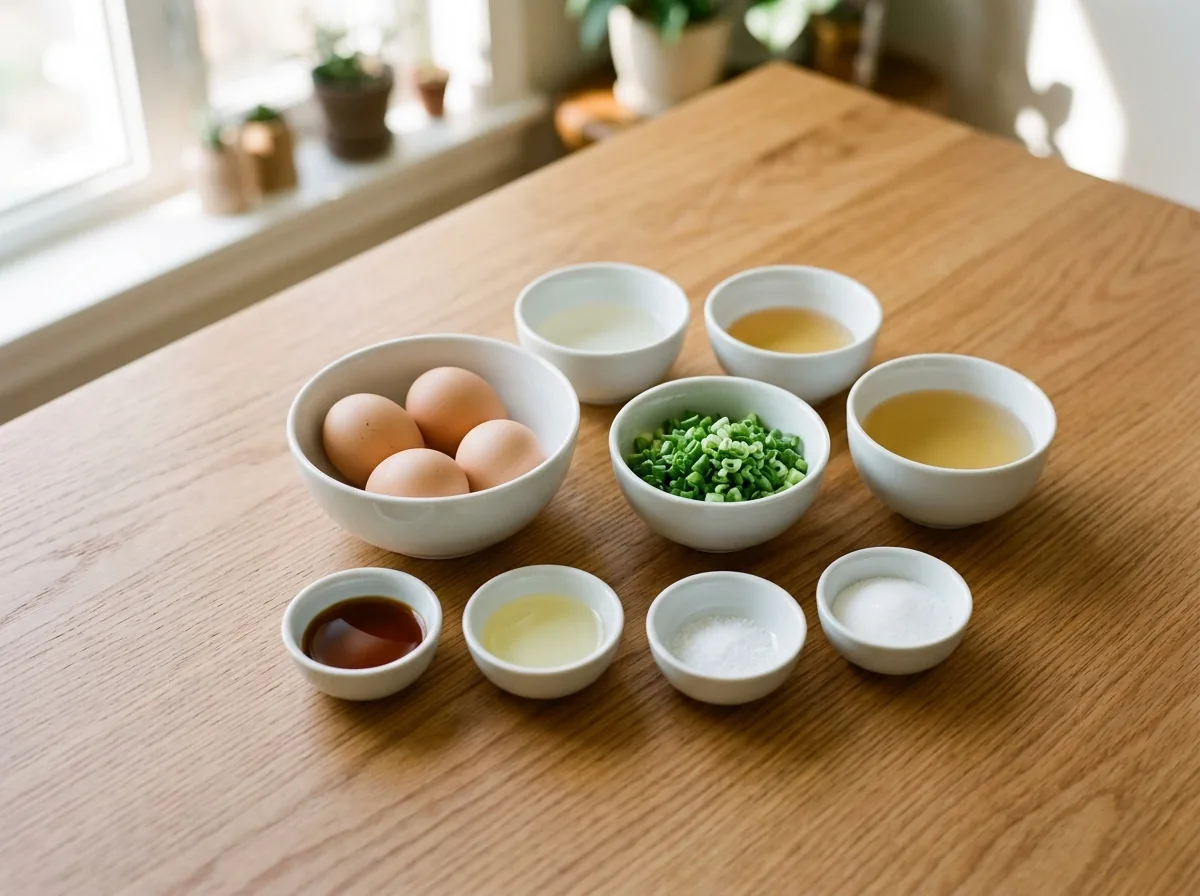
| Ingredient | Amount | Category · Prep Note |
|---|---|---|
| Large eggs | 4 large (7.8 oz / 220 g) | Grocery list (skip if on hand · ~2 oz / 55 g each) |
| Savory dashi or kelp broth | 4 tbsp (60 ml) | Grocery list (secret to moist, umami-rich layers) |
| Scallion (finely chopped) | 1 tbsp (0.3 oz / 8 g) | Grocery list (skip if on hand · stir in after straining eggs) |
| Korean soup soy sauce (guk-ganjang) | 1 tsp (5 ml) | Pantry staple (savory egg seasoning) |
| Fine sea salt or kosher salt | ⅓ tsp (2 g) | Pantry staple (clean base seasoning) |
| Rice wine or sake (cheongju) | 2 tbsp (30 ml) | Pantry staple (eliminates any eggy aroma) |
| Mirin (sweet cooking wine) | 1 tbsp (15 ml) | Pantry staple (subtle sheen & gentle sweetness) |
| Sugar | 1 tsp (4 g) | Pantry staple (keeps the omelet tender) |
| Neutral cooking oil | 1–2 tsp (5–10 ml) | Pantry staple (wipe thinly across the pan) |
※ Dual Measurement Guide: Both the ingredient table and cooking steps include US volume & weight (tbsp, tsp, oz) alongside metric (g, ml) so you can measure effortlessly with standard kitchen spoons or a digital scale.
No Special Ingredients or Pan? No Problem · Chef T404's Substitution Tips
- Out of bonito or kelp dashi?: Steep a small piece of dried kombu (kelp) in cold water for 10 minutes, use Korean anchovy-kelp stock, or dilute a splash of store-bought tsuyu soup base in water.
- No rectangular tamagoyaki pan (5×7 in / 13×18 cm)?: A standard round nonstick skillet works great over medium-low heat. Pour a thin layer of egg, fold both left and right edges inward once, then roll it up into a neat, plump rectangle.
- Only have mirin OR dry cooking wine?: Use whichever Korean cooking wine, sake, or mirin you keep in your pantry. Since sugar is added separately, just reduce the sugar slightly if using all sweet mirin.
- No bamboo sushi mat for shaping?: Wrap the warm omelet snugly in parchment paper or a clean paper towel and press gently with your palms to set crisp, tidy edges.
Chef T404's Recipe
Grab a mixing bowl, a fine-mesh strainer, and a rectangular omelet pan (around 5×7 in / 13×18 cm) or nonstick skillet. Every step includes stovetop timing so you can take it nice and slow.
- 1Prep 5 minBeat 4 eggs with 4 tbsp (60 ml) broth, 2 tbsp (30 ml) rice wine, 1 tbsp (15 ml) mirin, soy sauce, sugar, and salt; strain through a sieve, then stir in chopped scallions.
- 2Med-Low 2–3 minLightly coat a warm pan with oil over medium-low heat, pour in ¼ of the egg mixture, and roll it up while still softly set on top.
- 3Med-Low 4–5 minSlide the roll to one end, wipe the bare pan with oil, pour in more egg mixture, and keep rolling into a thick, multi-layered log.
- 4Seal & Rest 3 minSeal the seam in the pan, shape gently with a bamboo mat, rest 2–3 minutes to set, and slice into thick pieces.
Chef T404's Pro Tip · Always strain the seasoned egg mixture first and stir in the chopped scallions afterward for the silkiest custard-like layers.
▼ Step-by-Step Visual Guide
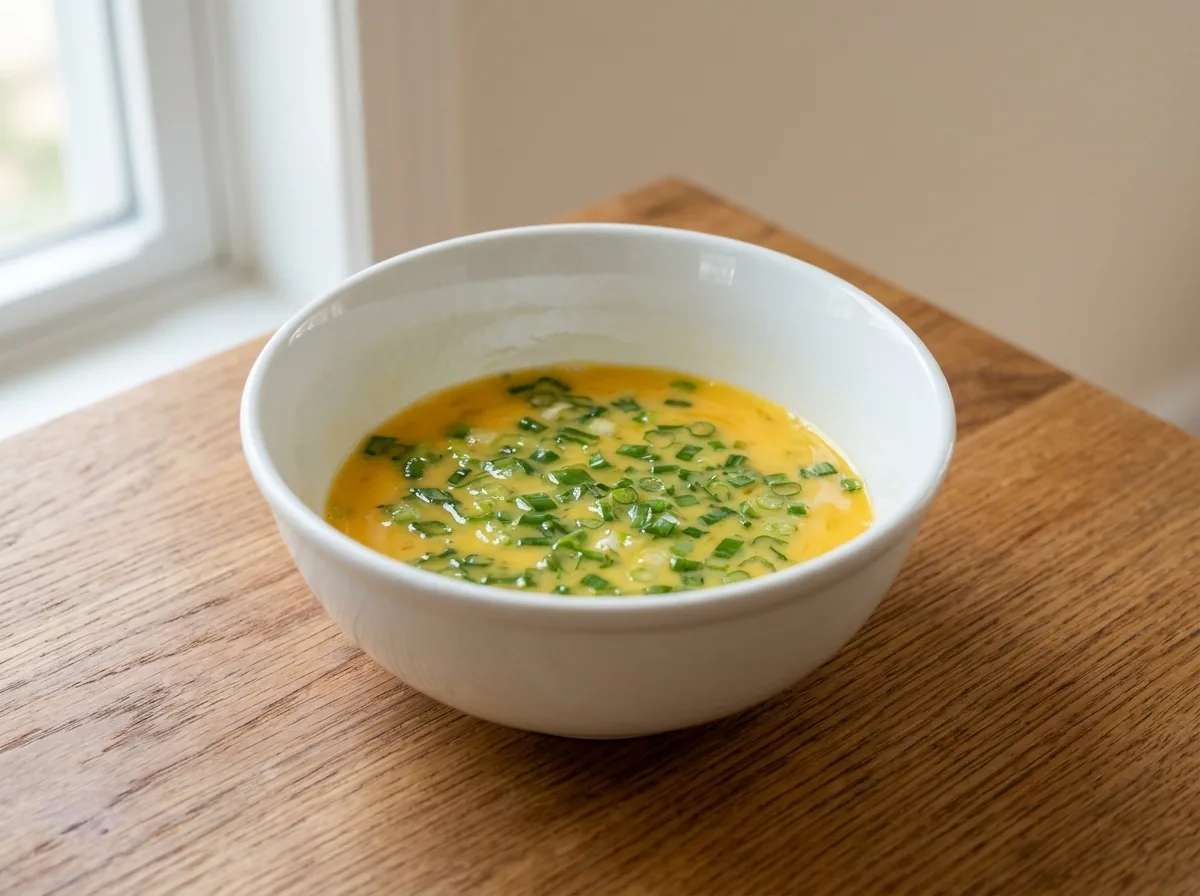
Step 1Season, Strain, and Fold In Scallions
5 min prep before heatCrack 4 large eggs (7.8 oz / 220 g) into a mixing bowl and pour in 4 tbsp (60 ml) savory broth, 2 tbsp (30 ml) rice wine, and 1 tbsp (15 ml) mirin. Add 1 tsp (5 ml) soup soy sauce, 1 tsp (4 g) sugar, and ⅓ tsp (2 g) salt, then stir gently with chopsticks without whipping in excess air.Wait to add the scallions — pour the liquid egg mixture through a fine-mesh sieve first to catch the stringy chalazae. Stir 1 tbsp (0.3 oz / 8 g) finely chopped scallions into the strained eggs so every layer cooks up velvety smooth.
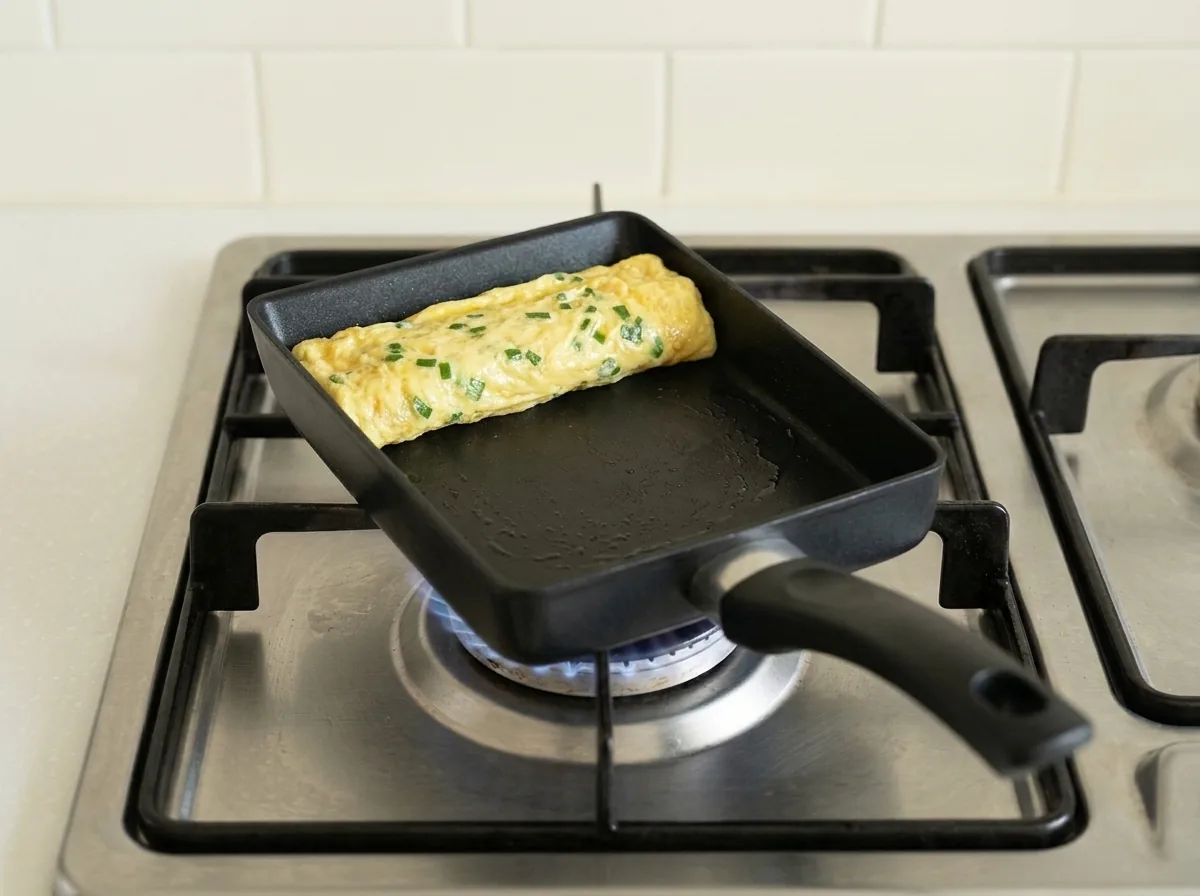
Step 2Warm the Pan and Roll the First Soft Core
Med-low heat · 2–3 minSet your rectangular omelet pan over gentle medium-low heat until evenly warm. Add a light drizzle of cooking oil and wipe it into every corner with a folded paper towel.Pour in about ¼ of the egg mixture and tilt to coat. When the surface is about 80% set and still glossy on top, roll it gently from one end to the other. Don't stress if this first roll tears slightly — it gets tucked right inside as the core!
Step 3Pour, Lift, and Build Plump Layers
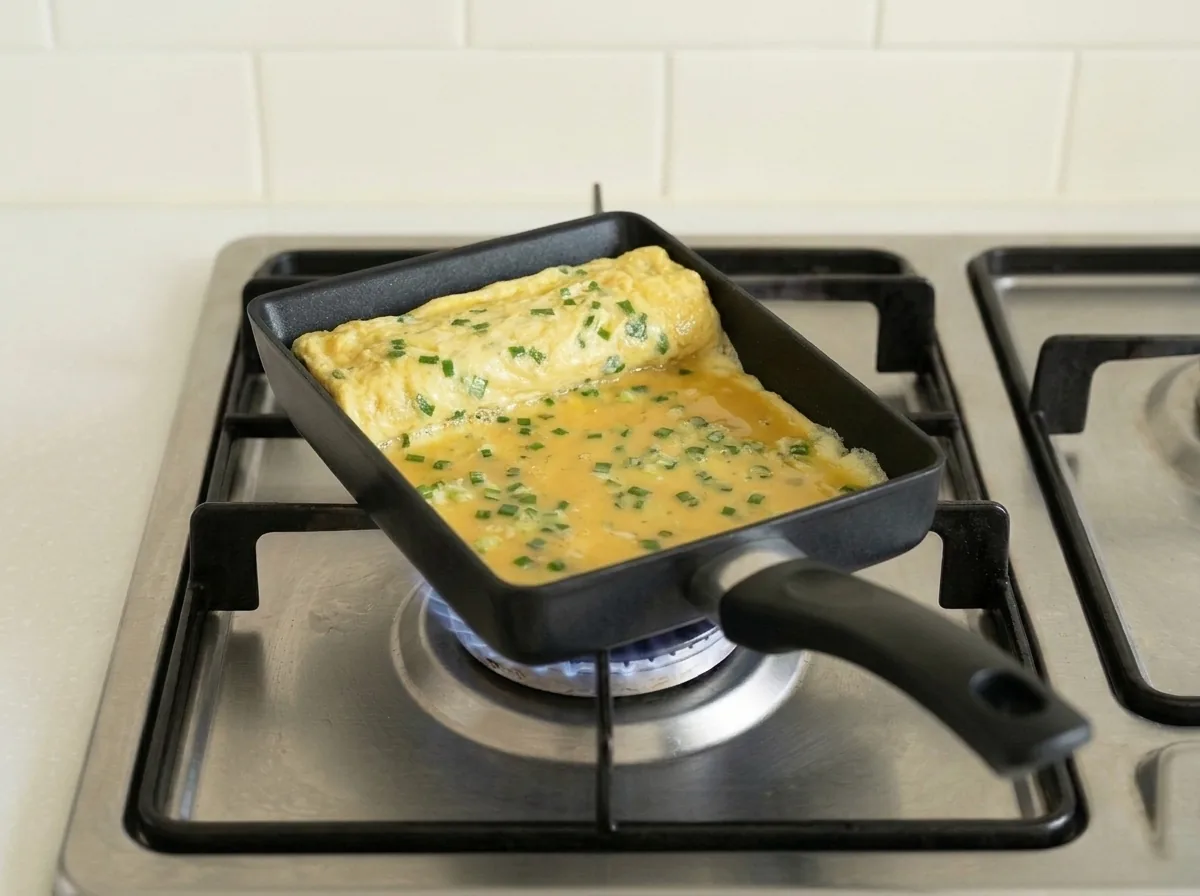
Med-low heat · 4–5 minSlide the rolled egg to one side of the pan and swipe the empty surface with your oiled paper towel. Pour in another thin layer of egg mixture to cover the pan floor.Gently lift the rolled omelet with your spatula so raw egg flows underneath and bonds the layers seamlessly. If big bubbles puff up, lift the pan off the burner for a few seconds to cool, then keep rolling until all the egg is used.
Step 4Seal the Seam, Shape, and Cool Slightly Before Slicing
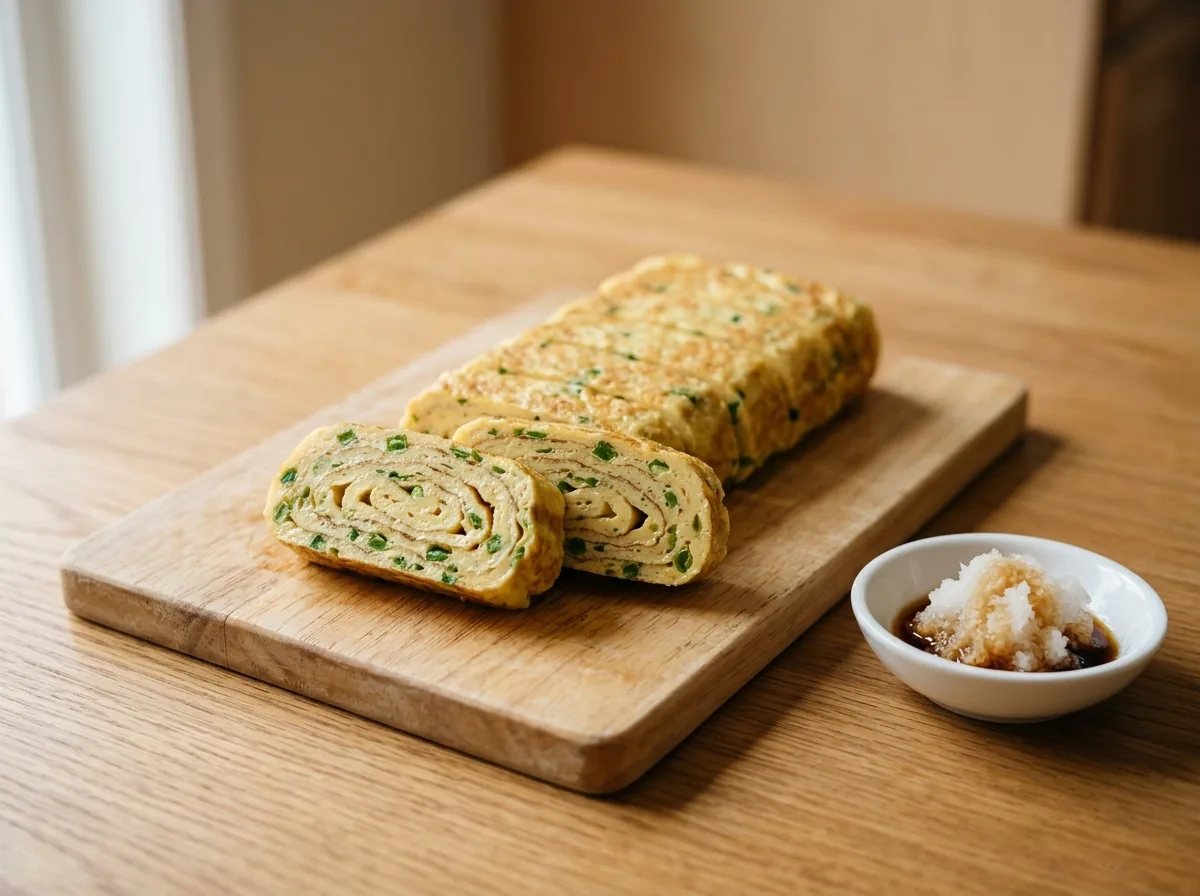
Seal & rest · 3 minOnce the final layer is rolled, rest the omelet seam-side down in the pan until lightly golden and sealed. Transfer it onto a parchment-lined bamboo mat and gently press into a neat block.Let it rest for 2–3 minutes so the layers lock together cleanly before slicing into thick bite-sized pieces. Cool completely before packing into lunchboxes, or serve warm with grated radish or scallion soy dipping sauce.
Make It Your Own & Smart Leftover Tips
Craving a spicy kick? Finely mince half a Korean green chili or jalapeño and fold it in with the scallions. Cooking for kids? Add finely diced carrot for sweet crunch and cheerful confetti colors.
Slice the rest of your scallion stalk on the bias and pop it in the freezer — it drops straight into a bubbling pot of Pork Kimchi Stew or a quick skillet of Kimchi Bacon Fried Rice. Save any leftover dashi broth in the fridge for tomorrow's steamed eggs or soybean paste stew.
Smart K-Food Grocery Checklist
Everyday pantry seasonings are already left off this list. Check your fridge first, cross off what you already have on hand, and pick up only what you truly need.
- Large eggs 4 large (7.8 oz / 220 g)
- Savory dashi or kelp broth 4 tbsp (60 ml)
- Scallion (finely chopped) 1 tbsp (0.3 oz / 8 g)
App Tip · From Fridge Eggs to Combined Stew + Side Dish Lists
Log your eggs and scallions in the Cooknator App, and it will highlight this Korean Rolled Omelet as a 1-ingredient-away side dish that only needs savory broth. Pair it on tonight's menu with Pork Kimchi Stew, set your serving size, and the app automatically combines total scallion amounts while subtracting the eggs and pantry staples you already own.
Want to auto-calculate exact ingredient quantities across your weekly meals in one click? Select [Desktop App] in the top-right corner.
Kitchen Notes · How Did Your Gyeran-mari Turn Out?
Tried rolling this omelet at home, or have questions about heat control and flipping your first layer? Tell us in the comments below — rustic first attempts are always welcome here!
- Did you roll yours in a rectangular tamagoyaki pan or a classic round skillet?
- Did you tuck in any extra family favorites like diced carrots, spicy green chili, or melty cheese?
- What soup, stew, or lunchbox main did you serve alongside your rolled omelet?
Wondering what to cook tomorrow with leftover eggs and veggies in your crisper drawer? Drop a note anytime in our Guestbook (Kitchen Q&A Box), and enjoy a warm, nourishing homemade meal today.
#GyeranMari #KoreanRolledOmelet #EggRecipes #Banchan #KoreanSideDishes #LunchboxIdeas #KoreanHomeCooking #KFood #Cooknator
댓글
댓글 쓰기